‘Youth workers provide a support system that we don’t always see, but sadly it doesn’t pay for them to stay doing their job,’ writes Miatta Fahnbulleh

By
Contents
<nav class="toc">
  <h3>Contents</h3>
  <ul id="toc-list"></ul>
</nav>
.toc {
  font-family: sans-serif;
  position: sticky;
  top: 80px;
  max-width: 300px;
}

.toc h3 {
  font-weight: 700;
  font-size: 1.1rem;
  margin-bottom: 0.5rem;
}

.toc ul {
  list-style: none;
  padding: 0;
  margin: 0;
}

.toc li {
  margin-bottom: 0.75rem;
}

.toc a {
  text-decoration: none;
  color: #1a1a1a;
  display: inline-block;
  padding: 4px 8px;
  border-radius: 4px;
  transition: background 0.2s ease;
}

/* Hover state */
.toc a:hover {
  text-decoration: none;
  background-color: #f5f7ff;
  color: #0070f3; /* blue hover text */
}

/* Active/selected state */
.toc a.active {
  background-color: #f5f7ff;
  font-weight: 600;
  color: #f48024; /* orange highlight */
}

/* Active + hover */
.toc a.active:hover {
  color: #f48024;
  background-color: #f5f7ff;
}
document.addEventListener("DOMContentLoaded", () => {
  const tocList = document.getElementById("toc-list");
  const headings = document.querySelectorAll("h2");

  headings.forEach((h2, index) => {
    const id = h2.id || `section-${index}`;
    h2.id = id;

    const li = document.createElement("li");
    const link = document.createElement("a");
    link.href = `#${id}`;
    link.textContent = h2.textContent;
    li.appendChild(link);
    tocList.appendChild(li);
  });

  // Scrollspy logic
  const links = document.querySelectorAll(".toc a");
  const observer = new IntersectionObserver(
    (entries) => {
      entries.forEach((entry) => {
        const link = document.querySelector(`.toc a[href="#${entry.target.id}"]`);
        if (entry.isIntersecting) {
          links.forEach((l) => l.classList.remove("active"));
          link.classList.add("active");
        }
      });
    },
    {
      rootMargin: "-50% 0px -50% 0px",
      threshold: 0
    }
  );

  headings.forEach((h2) => observer.observe(h2));
});

Contents


In Peckham and across the country, supporting young people remains a high priority.

Young people today are growing up in a culture shaped by social media scrutiny, algorithm-driven trends, and pressures around image, identity and status. Alongside this rising mental health challenges, fears for their personal safety and widening inequality deepen gaps in opportunity.

We know that support systems are fragile, pieced together across families, religious organisations, schools and medical professions.

But what we don’t hear about is the network quietly holding that support system together.

It’s not headline-grabbing, it’s not always visible, but it can be the difference between a young person being excluded or finding a pathway into a fruitful life.

That network is youth work.

Across Southwark, youth workers are doing the day-to-day work of building trust, supporting wellbeing, and keeping young people engaged – often long before issues escalate.

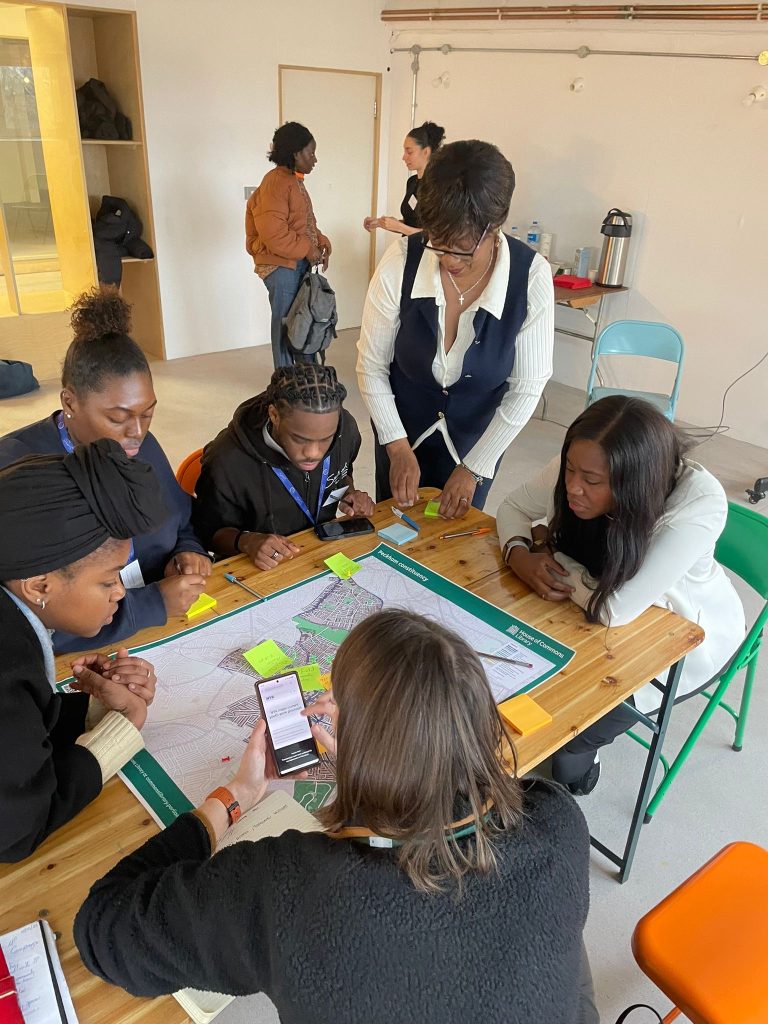
Since December, I’ve held two youth summits bringing together both young people and organisations. Across both spaces, the same issue kept coming up: youth work is undervalued, despite the level of responsibility it holds.

“People think youth work is just hanging out with kids – but we’re educators, mentors and support systems.” Shared local youth worker Katrina.

Youth workers build relationships with young people who may not trust traditional systems. They support emotional wellbeing, guide behaviour, and often act as a bridge between families, schools and communities.

The role sits in an awkward position, somewhere between education and social care but not fully recognised by either.

It’s not always listed as a formal profession, and funding rarely reflects the scale of the work. Support is often short-term and tied to specific programmes, rather than the longer-term, strategic investment needed to sustain youth spaces and community trust.

Another issue is that even though youth workers are local leaders- shaping outcomes for young people every day and skilled in a variety of overlapping professions – the career path lacks the status it deserves.

A lack of prestige, low pay and limited progression means that many move onto more sustainable careers, not because the work lacks impact or reward, but because it just doesn’t pay to stay.

The Southwark Young Advisors are one group trying to shift that. As young people working within the youth sector themselves, they’re helping bridge the gap.

As one adviser, Isaac, put it: “We need more resources going into young people supporting other young people. It helps show young people there are other pathways as well, instead of just a corporate job.”

At the same time, the need hasn’t reduced. If anything, it’s grown.

Youth workers are expected to step in where other systems have been reduced or cut. They’re doing the unseen preventative work, because when youth provision disappears, the impact becomes visible very quickly.

Over the years, youth centres across areas like Peckham have reduced or closed. The young people themselves haven’t disappeared – only the places designed for them.

“Sometimes they don’t need a programme,” Katrina says. “They just need a safe space to exist.”

Without those spaces and trusted adults, issues don’t vanish – they escalate. Disengagement increases, behaviour worsens, and the pressure shifts elsewhere, often back onto already stretched schools.

This is where youth work has a vital pastoral role, working alongside education. Youth workers engage with young people differently, they build trust over time outside of formal structures and often reach those who feel disconnected from school altogether.

The challenge is that much of the current system is reactive. Funding and attention tend to arrive after a crisis – after exclusion, after harm, after something has already gone wrong.

Youth work, by contrast, is preventative.

“We’re doing the work before things escalate,” Katrina explains, “but that’s the work people don’t see.”

Youth work isn’t an add-on service; it’s a core part of how we can support young people.

When speaking directly with young people and youth workers at the recent summits, it was clear that Southwark doesn’t lack committed youth workers or grassroots organisations. What is lacking is a system that fully recognises and supports them. New ideas are needed to combat this; one such innovation is the Youth Guarantee ensuring new career pathways and increased youth hub provisions both in Peckham and nationally.

We cannot continue to undervalue youth work as a society, because we risk not just undervaluing a profession, but removing one of the few things that consistently works and that is asked for repeatedly by our young people.

<?php 
  $user = get_the_author_ID();
	$pp = get_field('author_image', 'user_'.$user);

?>

<img src="<?php echo $pp;?>">

When researching an event technology partner to help scale your strategy, leveraging the right insights is crucial. But if you’ve spent time on sites like G2 and Capterra, you know how crowded the marketplace is — this is where event software analyst reports come in handy! With their deep dives into market trends, product evaluations, and vendor landscapes, analyst reports offer invaluable insights for decision-makers. Let’s dive into how to use these reports to select the best event technology solutions for your needs.

Follow Us

Get Updates from Miatta

Press releases

June 2, 2026

‘Our government will make big reforms for renters’, says Peckham MP

Young people today are growing up in a culture shaped by social media scrutiny, algorithm-driven trends, and pressures around image, identity and status...
Read Full Article
June 2, 2026

‘We are asking the wealthiest and businesses to increase funding for public services’, say Peckham MP

Young people today are growing up in a culture shaped by social media scrutiny, algorithm-driven trends, and pressures around image, identity and status...
Read Full Article
June 2, 2026

‘This is how I see the Renters Reform Bill working for a local mother from Walworth’ says Miatta Fahnbulleh

Young people today are growing up in a culture shaped by social media scrutiny, algorithm-driven trends, and pressures around image, identity and status...
Read Full Article
June 2, 2026

‘We are making it easier to see your GP’, says Peckham MP

Young people today are growing up in a culture shaped by social media scrutiny, algorithm-driven trends, and pressures around image, identity and status...
Read Full Article
June 2, 2026

Peckham MP and Energy Minister says: ‘We are working to bring down your energy bills’

Young people today are growing up in a culture shaped by social media scrutiny, algorithm-driven trends, and pressures around image, identity and status...
Read Full Article
June 2, 2026

‘Peckham is a sanctuary – my journey from unrest in Liberia to London’, writes MP Miatta Fahnbulleh

Young people today are growing up in a culture shaped by social media scrutiny, algorithm-driven trends, and pressures around image, identity and status...
Read Full Article
June 2, 2026

‘After Lakanal fire in Camberwell with the loss of three women and children opportunities on safety were squandered’

Young people today are growing up in a culture shaped by social media scrutiny, algorithm-driven trends, and pressures around image, identity and status...
Read Full Article
June 2, 2026

‘We are taking action on the housing crisis’, says Peckham MP

Young people today are growing up in a culture shaped by social media scrutiny, algorithm-driven trends, and pressures around image, identity and status...
Read Full Article
June 2, 2026

‘Community groups are bring down energy bills and invest the savings in service they provide in Southwark’, says Peckham MP

Young people today are growing up in a culture shaped by social media scrutiny, algorithm-driven trends, and pressures around image, identity and status...
Read Full Article
June 2, 2026

Peckham MP says young people need spaces – and they’re telling us that loud and clear

Young people today are growing up in a culture shaped by social media scrutiny, algorithm-driven trends, and pressures around image, identity and status...
Read Full Article